
Don’t judge a book by its cover. Beauty is more than skin deep. We’ve all heard these sayings, with their noble intent to encourage people to put aside their initial perceptions and take the time to really get to know someone or something. But what they don’t acknowledge is the fact that we humans, by nature, are hardwired to be judgemental. And for good reason.
Studies suggest that, since the very beginning, humans have leaned on their ability to perceive good and bad via visual cues, to help them survive. Nowadays, far from our ancestors' existential struggles, these instincts still guide us, but in a different way. Rather than helping us pick the right berries, they now guide us on which brands to trust and buy from.
Same same but different?
Imagine two products, nearly identical in specification - but one costs $500, the other $1500. At face value the choice is obvious - but what we haven’t accounted for is the role of brand and the subconscious emotional pull it exerts. Brands perceived as attractive, trustworthy, values-aligned, high quality or innovative can often justify a higher price point.
We can see this with Apple. They know that humans purchase based on emotion first, then justify with logic - and nothing appeals to our emotion more than leaning on our existing biases. Apple’s products offer similar functionality to many of their competitors - but their brand positions them as something more. A clean, premium aesthetic. Minimalist design that screams confidence. Beautiful packaging with clever, subtle touches. Sleek, modern stores that feel like a gallery. Beautiful photography and video content. Thanks to decades of conditioning, these are all attributes we associate with the idea of quality. When you buy from Apple, you’re not just getting a phone, you’re unlocking a curated brand experience, a lifestyle, a “feeling”. It’s special, elevated. You’re also buying certainty: it feels like everyone else has one, and it seems like it just works without fail - so it must be the right choice, right? Suddenly price doesn’t matter, because the perceived value you’re receiving is worth so much more.
The opposite is true too. If your brand is generic or ill-defined and your identity isn’t strong or differentiated, those emotions are harder to trigger, often leading to price-fighting tactics to stay in the customer's sight. And if price is the only weapon you have in your arsenal, it can be a very dangerous place to play. It leaves you open to resistance and challenges from your customer base, or competition from other businesses that can offer the same product or service for less.
It’s not all about looks and messaging. How you behave matters too.
The two are part of the same process we humans use to evaluate if something is trustworthy or not. For example, I was on a website recently looking to buy a piece of jewellery for my wife. I’d never heard of the brand before, but all the right cues were there: nice logo and brand identity; beautiful photography and video; helpful information; good ethical alignment - and the prices certainly made it all feel legitimate too. At a glance it ticked all the boxes. But within seconds, that perception began to erode. A pop up appeared offering me a discount if I signed up for their newsletter. Another discount was offered via a floating sidebar. A chat bot jumped into view asking if I needed assistance. And a timer at the top of the site ominously stated that I only had a few hours to make a decision. Suddenly, this had gone from having an enjoyable browsing experience at my own pace to something akin to buying from Temu - busy, frustrating and transactional. The experience that I had expected never materialised, and the initial trust that I had felt was gone, replaced with doubt and a desire to get out of there.
Inconsistency is the slow death of a brand.
Our brains are hardwired to seek and expect patterns in appearance and behaviour. That’s why luxury brands utilise clean space, well-considered typography and layout, beautiful imagery, and sophisticated colours. And price-fighting brands use intense colours, oversized elements, bold fonts and a ‘shouty’ tone. These visual cues help to position these brands and subconsciously attract or repel us accordingly.
Brand strategists, designers and marketers leverage this knowledge to build strong brands that look, feel and act with deliberate consistency, delivering against expectations at every touchpoint. It’s a never ending process that requires constant effort and vigilance. But if something within a brand changes or falls outside of the expected pattern, it can trigger a psychological process where our brains start to look for more examples of inconsistency, beginning a ripple effect that can be hard to pull back from. Imagine if your local Mercedes-Benz dealership employed a clown as a salesperson. Or Chemist Warehouse started selling genuine Rolex watches. It feels odd and causes us to question what we think we know of the brand. This is where brand love and trust can start to come apart.
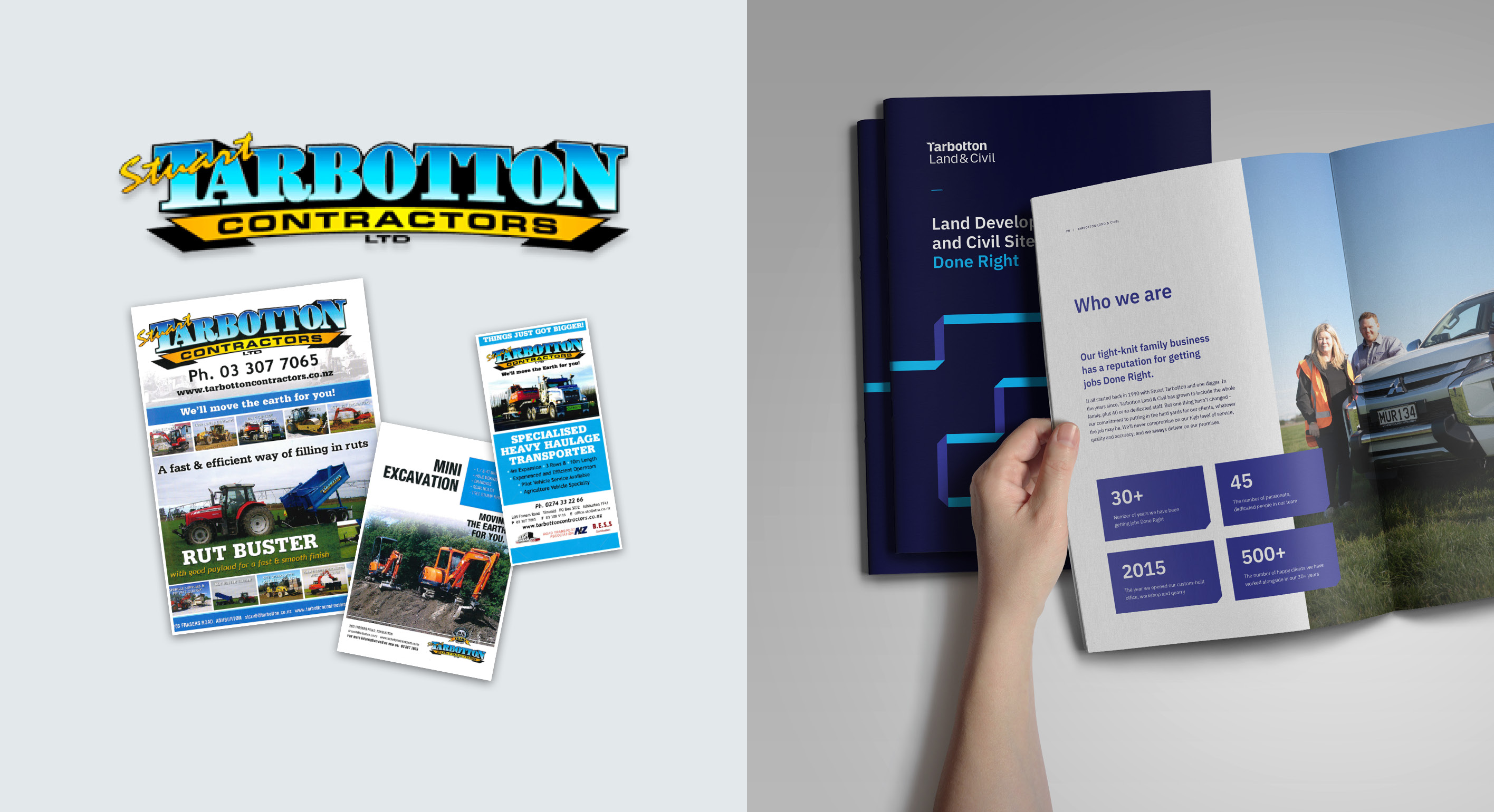
This was one of the issues facing our clients Tarbotton Land & Civil. A family-run business, Tarbotton had a good history and a reputation for quality, efficiency and commitment - but over the years, their identity had become dated, fractured and inconsistent. We worked with them to refine their name, develop a new brand strategy and identity, a new website, and a range of marketing initiatives to keep their name front and centre for their target audience. The result is a professional and modern brand that shows up consistently across all of their touchpoints. Check it out here.
In a day-to-day setting, inconsistency can be exacerbated by DIY design tools such as AI and Canva. Now, we’re not here to dump on them - quite the opposite - we use both AI and Canva ourselves, when appropriate. But at the end of the day, they are just tools - and tools are only as good as the person wielding them. Without the right assets, guidance, and knowledge, inconsistency can creep in. It’s a slow, gradual process: a new font is added for a campaign (but then ends up in every piece of content); a new colour is used to make the information ‘pop’; the tone of voice changes and begins to match the writer - not the business. Suddenly, the strong, consistent brand that had been developed to connect to a specific audience in a defined way has been diluted and confused.
The other issue we’re seeing with the rise of these tools is a ‘sameness’ permeating branding and advertising, which can have a real effect on a businesses bottom line. With so many people using the same templates, fonts, and assets, differentiation is becoming more difficult. So, even if you have a product or service that is genuinely unique and may serve your target audience better than anyone else, if your brand has low-quality design, there’s a chance you might not cut through the noise.
The relationship between a business and its customers is reciprocal. When a business invests in quality talent, manufacturing, design and marketing it signals that they’re taking their customers seriously, which in turn makes it easier for a customer to invest in buying that brand’s product or service. When that relationship starts to feel unbalanced, it can lead to the audience challenging the value of the product or service.
How we can use this knowledge to help our clients stay relevant, desired and grow.
So how can we, as businesses, marketers and designers use this knowledge to attract the right audiences and behaviours - and maintain them? There are some high level things we look to do to set a good course for the future.
First, we dive deep into the world in which your brand operates. This can include interviews and deep research, often focussed around ‘The 4 C’s’ - company, category, competitors and customers. Following this structure gives us a thorough insight into the things that matter most:
- The environment you are part of (history, trends, external factors, cultural norms)
- The brands you’re up against (their product/service; how they show up; strengths and weaknesses)
- The people you want to attract (who they are; where they are; what they need; what motivates them)
Next, we take this information and start to form up a brand strategy. This becomes the foundation of your brand, and provides guidance on how to look, act and sound into the future. It may include things such as:
- Brand architecture (how your brand is structured to allow for future products or services, acquisitions, or divestment)
- Brand foundations (things like your purpose, vision, values - why you exist beyond simply making money. This is super relevant to today’s consumers, many of whom will only buy from brands that they align with at a deeper level)
- Brand positioning (where you sit in relation to your competitors, your brand pillars, what differentiates you, and your tone of voice and brand personality).
With the above resolved, we then move into developing the visual identity. As explored above, a brand is so much more than a logo or pretty colour palette. But, these elements (along with everything else in a visual identity) play an integral role in setting the right tone and expectation. After all, an Audi advert set in Comic Sans might not appeal to the right buyer. So we select appropriate fonts, develop patterns, illustrations and photography guidelines - and yes, we’ll also design logos and custom colour palettes - to build a comprehensive and flexible toolkit of assets and elements. And we’ll put them together in a range of concepts so you can see how it can come to life across various channels and touchpoints.
Once all of the above is complete, we’ll aid with the rollout across signage, stationery and branded collateral, and collate all information into a thorough guidelines document which outlines how to use the brand correctly moving forward, ensuring consistency over time. Often, we’ll also provide design templates for key assets to ensure any work completed in house remains true to the wider brand.
But that is really just the beginning - the solid foundation to build on. From there, it’s time to consider the ways in which your brand comes to life through marketing, web and social media to ensure you’re getting in front of the right people, in the right places, at the right time. It sounds like a lot, but we can help you with every step. And because brands, people and technology are constantly evolving, we review and refine as we go, to ensure your brand remains relevant.
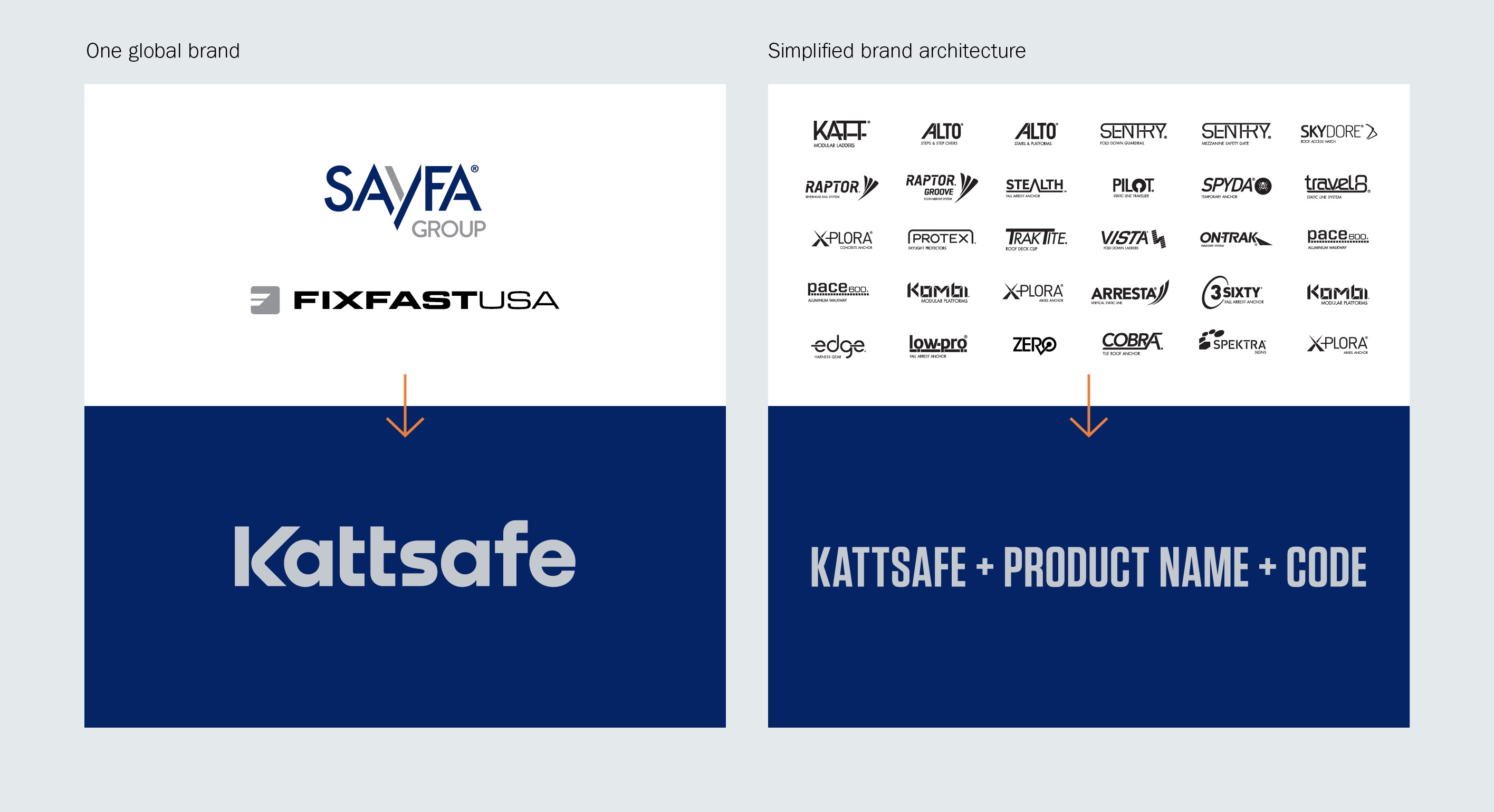
To get an idea of what this all looks like, check out our partnership with Kattsafe. We’ve helped to streamline their brands and product offering, and give them a fresh new identity to take on the world, alongside a new website and myriad marketing initiatives. And the results we’re seeing prove that this has been the right choice for this ambitious business. Check out the full case study here, or view our brand identity refresh here.
It is crucial to remember that a brand is not just how you look; it’s a driver of demand, differentiation, and long-term commercial value.
Getting started.
We humans are complex creatures. But when it comes to attracting us (and our dollars), it’s pretty simple. Know your audience and your context. Look (and act) the part. And keep up appearances. If you can do that, you’ll be on to a winner. Not sure how to do it? Easy - let’s have a chat. We’re experts at building brands from the ground up, or helping existing ones grow further. Our fully integrated offering ensures we can bring together specialty skills across strategy, web, tech, design, and marketing to make it happen the right way.


